


A Guide to Selecting the Right Range Hood for Your Kitchen
A range hood does more work than almost anything else in your kitchen. It pulls smoke, grease, steam, and cooking odors out of the room before they settle into your cabinets, your ceiling, and the rest of the house. It is also one of the first things people notice, since it usually sits right at eye level above the range.
Choosing the right one comes down to a handful of decisions: the style that suits your layout, the size of your cooktop, how much air the hood needs to move, and where that air will go. Here is how our designers walk Columbus and central Ohio homeowners through each one during a kitchen remodel.
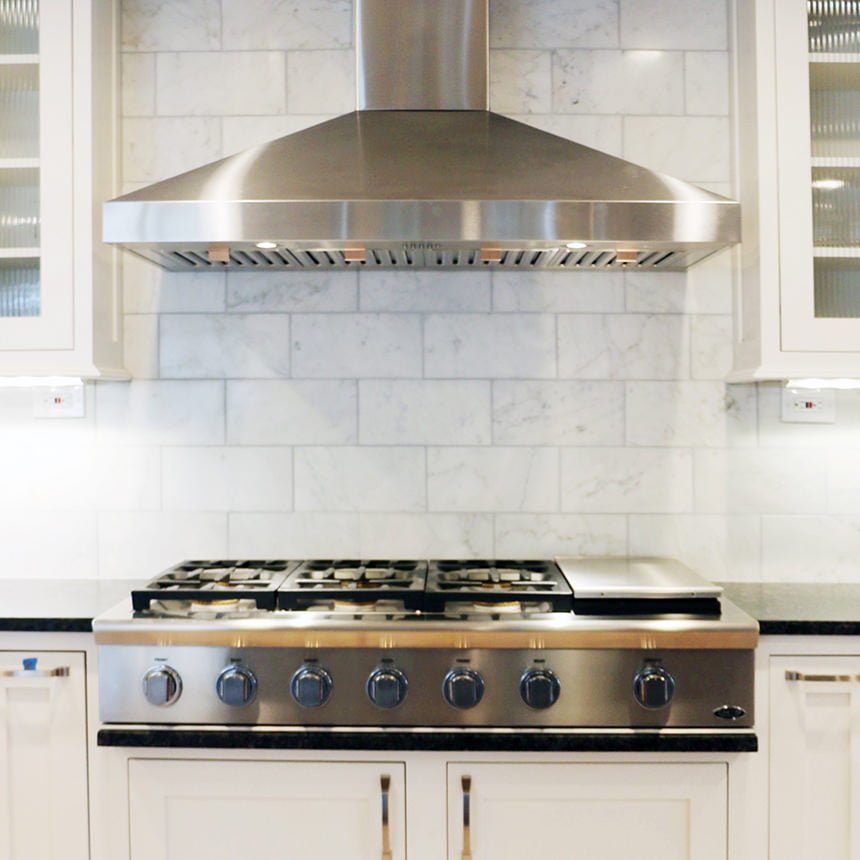
Start With Where Your Cooktop Sits
The location of your range or cooktop narrows the options before style ever comes into it.
- Wall chimney hoods mount on the wall above a range and vent up through a chimney cover. They are the most common choice when the range sits against a wall with open space overhead.
- Under cabinet hoods tuck beneath a short run of wall cabinets. They keep storage above the range, which makes them a practical fit for smaller kitchens and galley layouts.
- Island hoods hang from the ceiling over a cooktop set into an island. With no walls to help contain smoke, they need to be wider and stronger than a wall hood over the same cooktop.
- Downdraft vents rise from behind the cooktop or sit flush with it, pulling air down and out. They keep sightlines open across an island, but they capture less from tall pots than a hood overhead.
If you are still deciding where the range will go, our guide to kitchen layouts from galley to U shape shows how cooktop placement works in each plan.

Size the Hood to the Cooktop
A hood that is too narrow lets smoke roll out past its edges before the fan can catch it. These are the general guidelines we design around:
- Width. A wall hood should be at least as wide as the cooktop. Going about 3 inches wider on each side gives it a better chance of capturing everything, and island hoods benefit from that extra overhang even more.
- Height. Most manufacturers call for the bottom of the hood to sit roughly 24 to 30 inches above the cooking surface, sometimes a bit higher over gas. The installation instructions for each model set the exact range, and we follow them.
- Depth. A hood that reaches over the front burners catches the steam that tends to slip past a shallow model.
How Much Ventilation Power Do You Need?
Hood power is measured in CFM, the cubic feet of air the fan moves per minute. More is not automatically better. The right number depends on what you cook on and how you cook.
- Gas ranges and cooktops. A common rule of thumb is about 100 CFM for every 10,000 BTUs of combined burner output. A professional style range with high output burners can call for considerably more.
- Electric and induction. A typical guideline is about 100 CFM for every 10 inches of cooktop width, so a 30 inch cooktop lands around 300 CFM.
- Your cooking style. Frequent searing, stir frying, or griddle cooking produces far more smoke and grease than mostly simmering and baking.
Powerful hoods bring a planning detail many homeowners do not expect. When a fan pulls a lot of air out of a tightly built house, that air has to be replaced. Many building codes, including those based on the International Residential Code, require a makeup air system once a hood exceeds 400 CFM. We account for it during design so it never turns into a surprise at inspection. If you cook like a pro, our post on kitchen design ideas for the home chef covers more of what a serious cooking kitchen needs.
Ducted or Recirculating?
A ducted hood sends air outside through a duct in the wall or roof. It is the most effective option because it actually removes heat, moisture, and grease instead of filtering them. Ductwork performs best with a short, direct run, as few elbows as possible, and smooth rigid metal duct sized to the hood’s outlet.
A recirculating, or ductless, hood pulls air through charcoal filters and returns it to the room. It helps with odors and some grease, but not heat or humidity, and the filters need regular replacement. It can make sense where running a duct outside is not practical, such as some condos or interior walls.
In a full remodel, walls and ceilings are often open anyway, which makes it the ideal time to route a proper duct. Doing it then is far easier than retrofitting one later.
Noise, Lighting, and Everyday Features
A hood only helps if you turn it on, and loud hoods tend to stay off. Fan noise is rated in sones, and a lower number means a quieter fan. Check the rating at low and medium speeds, not just the top setting, since that is where the hood runs most of the time. Inline and exterior blowers, mounted in the duct run or on an outside wall, move much of the motor noise away from the kitchen.
A few other features are worth weighing:
- Task lighting. Built in LEDs put bright, even light right on the cooktop and work alongside the rest of your layered kitchen lighting.
- Baffle filters. Stainless baffle filters trap grease well and clean up quickly in the dishwasher.
- Variable speeds and a delay timer. Letting the fan run a few minutes after you finish clears lingering steam and odors.
Choose a Style That Fits Your Kitchen
Once the function is settled, the hood becomes a design feature. Stainless steel chimney hoods suit modern and transitional kitchens and match stainless appliances. Glass canopy hoods feel lighter in an open floor plan.
For a more tailored look, a custom hood cover built from wood or plaster can hide a powerful ventilation insert inside. Finished to match the cabinetry, it can blend into the room, an approach we explore in our post on quiet luxury kitchens. Finished as a contrast, it becomes the focal point, as it does in the Powell project.

You can see more of the appliance upgrades we install, from panel ready refrigerators to professional grade ranges.
Plan Your Range Hood With The Creative Kitchen Co.
The best range hood is the one that is sized, ducted, and placed correctly for the way you cook. Our designers handle those details as part of every kitchen remodel, from ventilation planning to the finish on the hood itself. We work with homeowners throughout Columbus and central Ohio.
Give us a call at 614-971-3448 or schedule your free in home design consultation to start planning.